Here’s a closer, transcript-based summary of <raw transcript> that stays nearer to what was actually preached:
The sermon opens with celebration that people had recently responded to Jesus, then turns to John 4 and the story of Jesus with the Samaritan woman at the well. The preacher frames the passage around the idea of being “not on the same wavelength,” saying that this is what happens in the conversation between Jesus and the woman: she keeps hearing him at a physical level, while he is speaking at a deeper spiritual level.
A major emphasis is placed on John 4:4, that Jesus “had to” go through Samaria. The preacher treats this as more than geography. He says Jesus was on a God-ordained assignment, intentionally taking the road through Samaria in order to meet this woman. From that, he applies the passage pastorally: Jesus crosses barriers on purpose, and God may also be intentionally meeting people in the room right where they are.
The sermon highlights how surprising this encounter would have been. Jesus crosses ethnic, social, and gender barriers by speaking publicly with a Samaritan woman. The preacher stresses that she was not looking for Jesus, but Jesus was looking for her. This becomes one of the main themes of the message: God goes to great lengths to reach people, to speak to them, and to meet them personally.
From there, the message turns to Jesus asking for water and then offering “living water.” The preacher says the woman keeps thinking in literal terms, while Jesus is speaking about salvation, transformation, and the deeper thirst in a person’s life. He draws this into present-day application by comparing the woman’s repeated trips to the well with the repeated things people return to for relief or satisfaction, such as distraction, habit, or other forms of temporary filling. The point is that earthly things keep leaving people thirsty, while Jesus offers something lasting.
The sermon then focuses on the turn in the conversation when Jesus tells her to call her husband. The preacher argues that Jesus is not trying to shame her, but to show that he knows her deeply and is moving toward the real wound in her life. He says Jesus addresses not merely outward need, but the deeper thirst beneath it, including shame, longing, and the need for acceptance, forgiveness, and relationship. He presents conviction here not as condemnation, but as part of Jesus lovingly connecting with her at the deepest level.
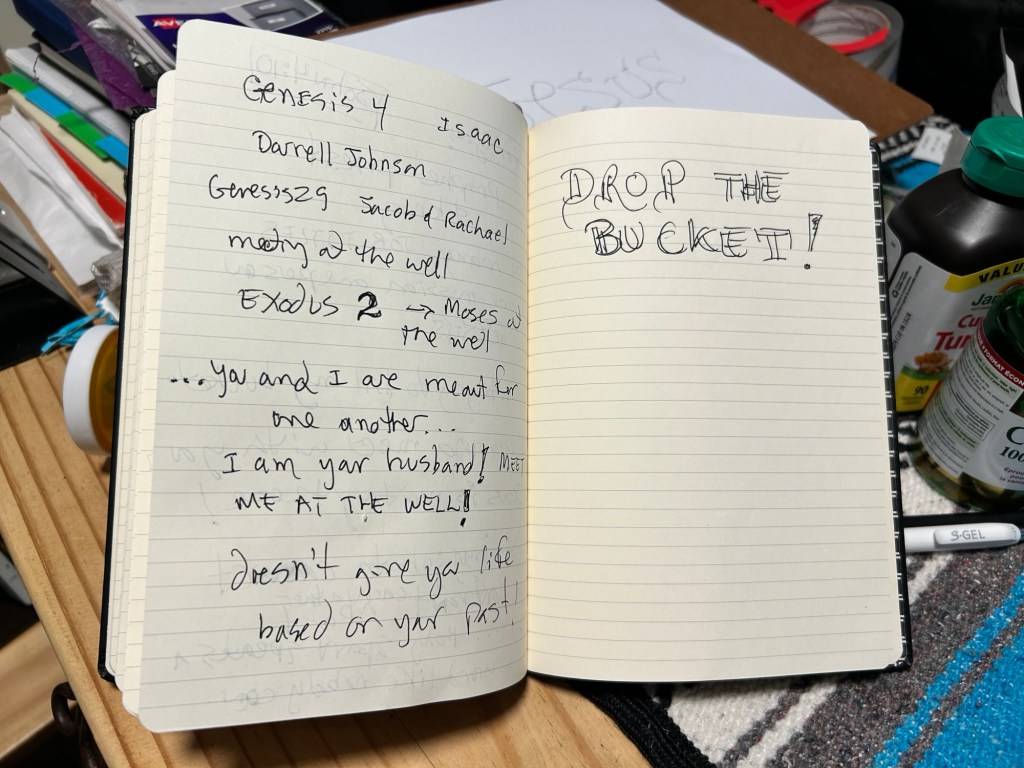
Another major thread in the sermon is the symbolism of the well. The preacher points back to Old Testament scenes where significant relationships or marriages were connected to wells, such as Rebecca and Isaac, Jacob and Rachel, and Moses meeting his future wife. From that pattern, he argues that the well in John 4 is not only about water, but about relationship. He develops this into the idea that Jesus, the true bridegroom, is meeting this woman at the well in order to restore relationship, and by extension is meeting people today in the same way.
The sermon closes by drawing the whole passage toward response. The preacher says Jesus was not after the woman’s bucket of water, but after her heart. He urges listeners to identify the “bucket” they keep carrying back to the same well, whatever pattern or substitute they repeatedly use to satisfy thirst. His call is to “drop the bucket” and let Jesus fill them with living water instead. He ends in prayer, asking God to reveal those false wells, to bring conviction without shame, and to draw people into real relationship with Christ. He also gives an invitation for those who want to begin that relationship for the first time.
 Running Down Vimy