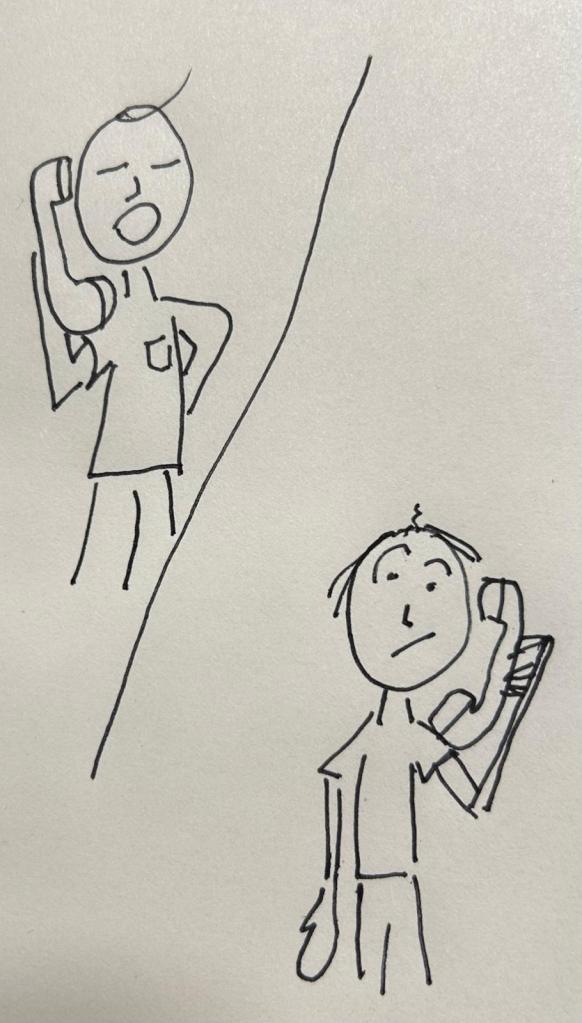
Eghad! I feel “out numbered” by Cheryl and constantly try to gain allies against her! The suffering, martyr with the fucked up spouse. This hurts to realize.
Outnumbered?!? I mean “helpless against” actually.
Today I engaged in not trying to change her. I love her.
Below is an ongoing discussion with myself… it was initiated by one of my kids telling me they are wrestling with trusting me, with information.
In my Eulogoy to my Mum I talk about our shared BIG MOUTH… and I’ve defended it, somethink akin to this is my “adorable quirk”
The whole topic might fit under gossip.
It is for me a family character trait, learned behaviour through my own Mum mostly.
She’s dead. And saintly.
For me… it’s a case of winning an argument with Sam, by continuing the discussion with anyone but Sam. A group of folks who agree with me, and now hate Sam, forms. I’m good until someone slips up and tells Sam I’ve been slagging him.
“I told you not to tell him!?!”
But what the heck? Learned behaviour isn’t carefully thought out anyway.
“How To Win Friends and Influence People” – nobody ever wins an argument.
Agree with me or else.
It’s an ugly topic!
I venture to Google…. Research?
I’m interested in the fact that I don’t feel like an expert in something that I’m always guilty of. So I’m going to a third source to find out more about it. Confirmation Bias*
Allies
Here’s one article <here> that does not forbid it, but offers some insight about why it happens.
Common Family Triangles
- The Child Mediator: Consider the case where a child becomes the confidant or mediator between conflicting parents. While this might offer temporary relief, it can place an undue emotional burden on the child.
- The Outsider Ally: Sometimes, one partner might seek sympathy or support from someone outside the immediate family (a friend, coworker, or even a social media group), creating a triangle that can lead to feelings of betrayal or exclusion in the other partner.
- The Generational Loop: Grandparents who side with grandchildren in disputes, bypassing the parents’ authority, create another common triangle. This can undermine parental authority and complicate family dynamics.
- Source
<Here> is another one that see it as a fact, calling a building block.
Third Leg?
The patterns in a triangle change with increasing tension. In calm periods, two people are comfortably close “insiders” and the third person is an uncomfortable “outsider.” The insiders actively exclude the outsider, and the outsider may feel rejected and work to get closer to one of them. Someone is always uncomfortable in a triangle and pushing for change. The insiders solidify their bond by choosing each other in preference to the less desirable outsider… Quote Source.
Not A Good Thing
<here> is a point of view that is against it.
These boundaries can protect us from being sucked into triangles.
Competing
Everyone knows mothers-in-law who are a terror to their son or daughter-in-law, seeing them as competitors for their child’s affection.
The objective whether unbeknownst or not… is to get rid of all competition.
Sibling rivalry is the wish of a child to have the exclusive love of a parent, through wishing the sibling is DEAD.
 Running Down Vimy