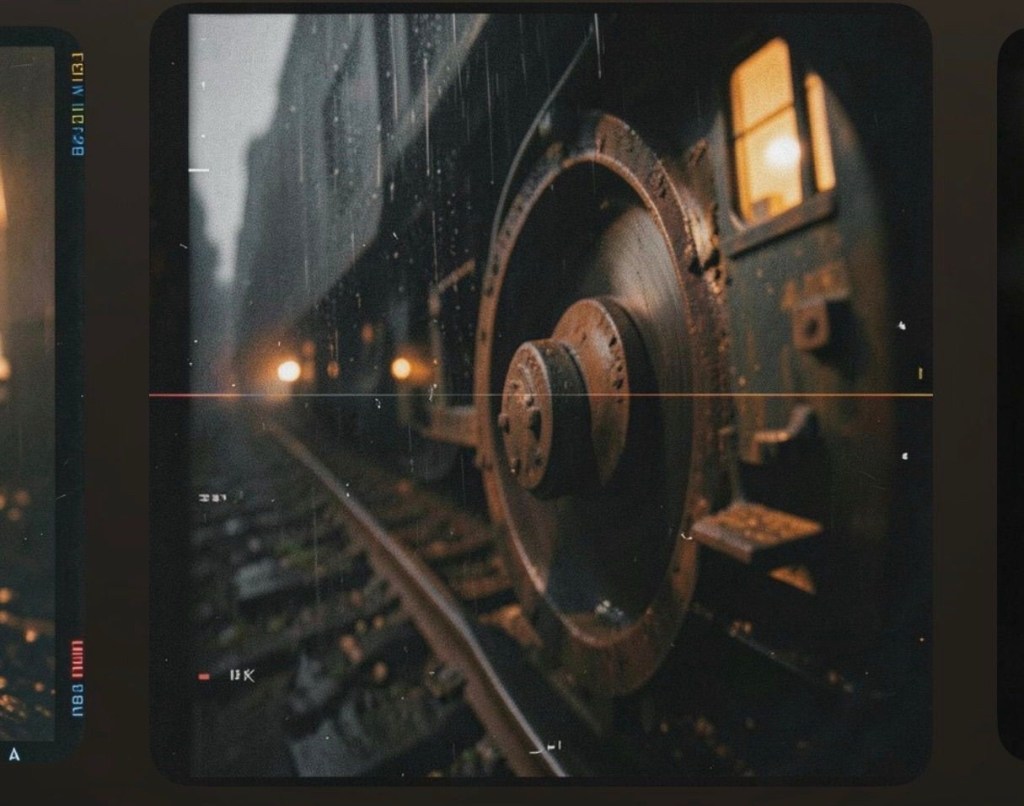
The Train Is Still Running
Some poems and songs have entered my life before I understood why.
A line catches somewhere beneath conscious thought. Sometimes I carry it for years. Sometimes I unexpectedly weep. Only much later do I begin to see what my inner man may have recognized before I had words for it.
- T. S. Eliot’s The Love Song of J. Alfred Prufrock.
- Peter Gabriel’s Solsbury Hill.
- City of New Orleans, as I first encountered it through Willie Nelson.
- …and even, Rammstein’s Du Hast.
Those don’t belong together on anybody’s sensible playlist.
Yet somehow, in me, they do.
And Hebrews 11:6…
And without faith it is impossible to please him, for whoever would draw near to God must believe that he exists and that he rewards those who seek him.” Hebrews 11:6
…has helped me understand something about why I don’t necessarily need to understand why.
At a Glance
I have loved Prufrock since I was young.
One line stayed with me from high school:
“I have measured out my life with coffee spoons.”
My English teacher suggested that it was something like living for the coffee breaks, weekends and summer vacations rather than for the life happening between them.
Years later, around 2017, something shifted for me.
As a bus driver, I stopped thinking primarily about the breaks at either end of the route and began noticing the stretch between the breaks.
There were people there.
Matthew 25:31–46 changed how I saw them.
Romans 1:11–12 gave me another way of understanding the encounter: not merely I have something to give you, but the possibility that we might mutually encourage one another.
The part I had regarded as the interval turned out to be life.
Years ago, after repeatedly reading Prufrock, I reached its final image,
I have seen them riding seaward on the waves
Combing the white hair of the waves blown back
When the wind blows the water white and black.
We have lingered in the chambers of the sea
By sea-girls wreathed with seaweed red and brown
Till human voices wake us, and we drown.
the strange underwater chambers, the sea-girls, and then the human voices, and I unexpectedly found myself weeping.
I still can’t fully tell you why.
And perhaps I don’t need to.
Something similar happened with Peter Gabriel’s Solsbury Hill. The invitation to gather everything and be taken home brought tears. But the ending went deeper: by then, even the things could be left behind.
Home mattered more than the baggage.
And years before either of those realizations, during the upheaval surrounding the end of my first marriage, Willie Nelson sang City of New Orleans from a cassette tape.
Again, unexpected tears.
This time I knew something immediately:
I was the train with the disappearing railroad blues.
The family landscape I knew seemed to be disappearing. I could not see the track from 1987 to 2026.
But I remained their father.
And the train kept running.
Then there is Rammstein’s Du Hast.
I don’t particularly care why I love it.
I can imagine myself sitting in a nightclub surrounded by headbangers, flashing lights and pounding industrial music—and somewhere along the wall are the finger-pointers wondering what somebody like me is doing in a place like this.
That image makes me think of Jesus at the table with people respectable religious observers thought he shouldn’t be with.
I don’t need to explain the music before I am allowed to hear it.
Maybe that is part of what all these works have been teaching me:
Recognition sometimes comes before explanation.
Hebrews 11:6 doesn’t tell me that God rewards those who finally figure everything out.
He rewards those who seek Him.
The map was never mine to hold.
The train is still running.
I’m going Home.
Linger Here
1. Prufrock — When Recognition Comes Before Understanding
I had never really tried to “figure out” The Love Song of J. Alfred Prufrock.
I was happy simply to have experienced it.
That may be important.
The opening itself contains a strange contradiction. Eliot invites us to go somewhere—“Let us go then, you and I”—and immediately compares the evening spread across the sky to an anaesthetized patient on an operating table.
Movement, followed immediately by paralysis.
For years I had misunderstood the grammar. I thought the person being invited along was the one etherized upon the table.
No. It is the evening.
But perhaps my mistaken reading wasn’t entirely foreign to the experience of the poem. Prufrock spends much of it wanting to move while remaining terribly, painfully conscious of himself.
Can I speak?
Do I dare?
How will I appear?
What will they think?
And somewhere among all of that comes the line that lodged in my memory when I first encountered the poem in high school:
“I have measured out my life with coffee spoons.”
My teacher talked about coffee breaks, weekends and summer vacations.
I remembered that thought for decades.
But eventually the question changed for me.
What if the part between the coffee breaks is my life?
2. Between the Bus Stops
For years, a bus route naturally divided itself into work and breaks.
Drive the route. Reach the end. Break.
Then go again.
Around 2017 my attention began moving away from the intervals at either end and toward the people I was carrying between them.
Matthew 25 had something to say about that.
Jesus’ description of feeding, welcoming, clothing and visiting people places enormous significance upon ordinary encounters with actual human beings.
And Romans 1:11–12 added an important correction to the way I might otherwise understand that.
Paul begins by wanting to impart something to the Romans. Then he almost interrupts himself: rather, that we may be mutually encouraged by each other’s faith.
That changes things.
The passenger isn’t merely my opportunity to perform a good deed.
There are two people here.
I may have something to give.
I may also have something to receive.
The stretch between the breaks isn’t dead time on the way to my life.
It is life.
3. The Chambers of the Sea
But the deepest emotional response I have had to Prufrock came at the end.
I had been reading the poem repeatedly. Then one day I reached those final three lines about lingering in the chambers of the sea, accompanied by sea-girls among red and brown seaweed, until ordinary human voices awaken us.
And we drown.
I wept.
Not because I had solved the poem.
I hadn’t.
Even now, I cannot completely explain those tears.
There is something astonishing about Eliot’s reversal. Normally the underwater world is where human beings drown. Waking would rescue us.
Here it is the opposite.
Somehow we can breathe in the strange underwater world.
It is the waking that drowns us.
And there is another tiny word that has begun to matter to me:
We.
For so much of Prufrock, we inhabit the consciousness of an intensely self-conscious “I.”
Then, at the end:
We have lingered.
Perhaps some things are better lingered in than explained.
4. Solsbury Hill — Someone Has Come
Then I brought Peter Gabriel’s Solsbury Hill into the conversation.
Again, tears.
The first time comes with the voice announcing that it is time to gather one’s things because someone has come to take him home.
But the ending goes further.
By then, he doesn’t need the things.
They can be left behind.
That movement gets me:
First: bring your things.
Finally: keep them. I’m going Home.
The song also contains another image that suddenly connected with Prufrock and with my own story.
Gabriel’s narrator finds himself going from day to day, part of the scenery, until he finally walks out of the machinery.
There are the coffee spoons again.
Routine.
Days passing.
Life becoming machinery.
Except I didn’t need to quit driving the bus to walk out of that machinery.
The machinery could remain.
What changed was my relationship to it.
The people between the breaks became visible.
5. City of New Orleans — The Disappearing Railroad
This recognition had happened to me before.
Around the end of my first marriage, my whole understanding of my life was being threatened.
Father. Mother. Four children. One household.
Then divorce.
I was between the life I had known and the life I couldn’t yet imagine.
There were some Willie Nelson cassette tapes around, and I listened through them.
Then came City of New Orleans.
And there it was again.
Unexpected weeping.
But this time the recognition came quickly.
I was that train.
The railroad was disappearing.
The landscape I understood was disappearing.
I couldn’t see where the track went.
And there was something particularly painful beneath that upheaval: whatever happened between their mother and me, I remained my children’s father.
A map can change.
Relationships can become terribly complicated.
People can disappear from one another’s daily lives.
But I was still their father.
The man listening to that cassette in 1987 couldn’t possibly see 2026.
He didn’t know where all those rails would go.
But now I can look backward across nearly forty years and say something he could not yet know:
The train kept running.
I’m still chugging up and down the coast.
6. Du Hast — And I Don’t Need to Know Why
Then there is Rammstein.
Du Hast.
It makes absolutely no sense beside Eliot, Peter Gabriel and an old American railroad song.
Good.
I love it.
And I am not particularly interested in diagnosing why.
I can imagine myself sitting in a nightclub with the lights flashing and that enormous pounding music shaking the room around me.
Headbangers everywhere.
And along the edges of my imaginary room are the finger-pointers.
What’s he doing here?
What kind of Christian sits with these people?
There is something familiar about that question.
Jesus heard versions of it.
Why does your teacher eat with tax collectors and sinners?
There is freedom for me in that image—not the freedom of declaring myself right and everybody else wrong, but the freedom of no longer needing everyone around me to understand why something speaks to me before I am willing to receive it.
Sometimes my heart simply goes:
There.
I recognize something.
Understanding may come later.
Or it may not.
7. Hebrews 11:6 — The Answer
Eventually I said something very simple in the middle of this conversation:
Hebrews 11:6 is the answer.
The writer says that the person who draws near to God must believe that He exists and that He rewards those who seek Him.
Seek.
Not solve.
Not explain.
Not possess a map of everything God has ever allowed to happen.
Seek Him.
And the rest of Hebrews 11 makes that even more striking.
Abraham went without knowing where he was going.
Others saw promises from far away.
They described themselves as strangers and exiles.
They were seeking a homeland.
That sounds remarkably different from certainty.
It sounds like travelling.
Which means perhaps the younger man listening to Willie Nelson didn’t need to see the rails leading all the way to 2026.
He needed the next piece of track.
Perhaps the man driving the bus doesn’t need to wait for the break to begin living.
There is someone climbing aboard now.
Perhaps the man listening to Rammstein doesn’t need to justify why his heart responds before he is permitted to enjoy the music.
And perhaps the man who wept in Eliot’s underwater chambers doesn’t need to drag those tears onto an operating table and dissect them until he can explain them.
He can linger there.
Recognition Before Explanation
Maybe this is the thread connecting these unlikely companions.
Eliot gave me the sea.
Peter Gabriel gave me Home.
Steve Goodman and Willie Nelson gave me the railroad.
Rammstein gave me the pounding machinery and the freedom not to explain myself.
Scripture gave me seeking.
And my own life supplied the miles between them.
I still value understanding. I still ask questions. I still test what I think I see.
But perhaps I don’t have to demand an explanation as the admission price for experience.
Sometimes the inner man recognizes something long before the analytical mind can name it.
Sometimes tears arrive before words.
Sometimes the railroad disappears beneath you.
Sometimes you discover that the ordinary miles between the breaks were never merely the waiting room.
Sometimes you hear Home before you know where Home is.
And sometimes faith looks less like finally understanding the journey—
and more like continuing to travel toward the One you seek.
The map was never mine to hold.
The train is still running.
I’m going Home.
 Running Down Vimy