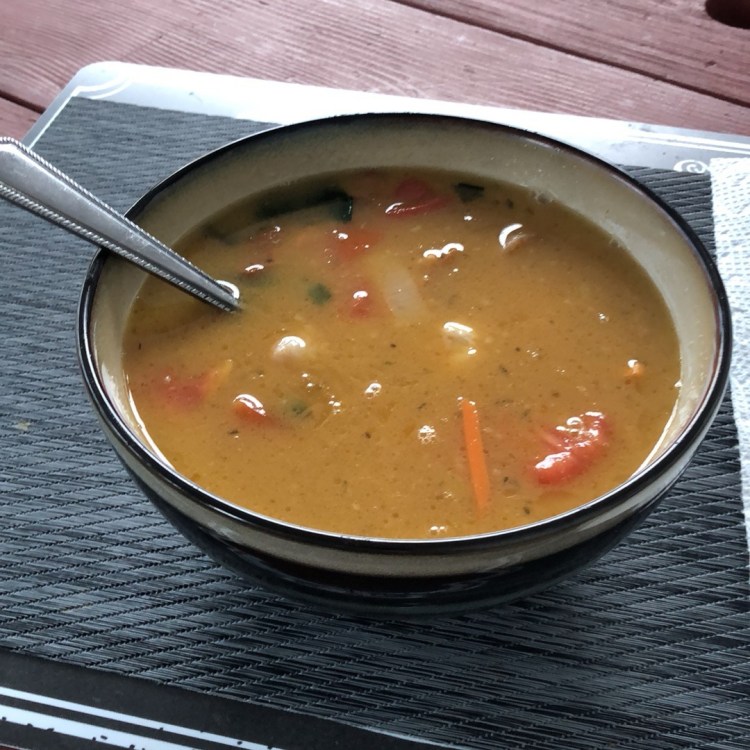
Soup Basics
There are basic things that I always do when making my soups.
- Broth> the broth success is seen the next day when its taken out of the fridge, and its jelly! This means that the stuff in the bones has done its work! Simmering the bones extracts collagen from the bones. If the bone broth is watery, its not concentrated enough.
- Fats> There are a few ways to get rid of and/or reduce the fat in the soup.
- One of the easiest ways is to just wait until the next day and skim it off the top of the broth since fats settle on the top.
- Second way is to pour the broth into a zip lock bag, and cut one of the corners off – while holding the bag over a catch bowl! As the liquid escapes, the fat will remain at the top. I hate to waste any broth, so you gotta be quick to make sure minimal fat gets let out. Obvs… a smaller corner cut results in slower drainage = more control.
- Store for use> Once the broth is created, it becomes a base for all of your soups
- Any ingredients left in the broth will continue to be part of the equilibration. Now then, lets just make that more understandable. If you leave noodles or rice in the broth, they will continue to absorb the broth, resulting in a huge, horrible mass of carbs and you’ll be experiencing dropped spoons, and unsolicited advice from the minions.
- If you’re really organized, you can portion the broth, and freeze it for future use. My good broth’s never last that long being gobbled up when not locked up.
- Game Day> When it’s time to serve some soup to the judging panel, you prepare fresh ingredients which include: protein, veggies, carbs, spices. These can be combined in the serving bowl, or can be cooked, and then presented for each person to choose their own… in various bowls! This greatly reduces risk of unsolicited advice and ostrich syndrome.
- Proteins can be variety of stuff that goes together, such as various seafood (shrimp, scallops) or one of Chicken/Beef/Pork portions cut up into bite size pieces. They can be left over from other dinners, or cooked up fresh.
- Veggies> I like to use very bite size pieces, such as julienne carrots, thinly sliced or diced onions, celery, leaks… diced tomatoes are awesome as well if the soup is compatible with it, if you’re not sure, add some, and place before the judging panel, you’ll soon know if it is or isn’t compatible. Mushrooms even!
- Carbs> left over or fresh rice and noodles of all types can be added
- Spices> these need to also be compatible with the original soup stock.
 Running Down Vimy