The inspiration of today’s blog post is something I read on a friends Facebook.
My own personal experience is that as a young man I found I did not relate to other guys so well as I did to girls. This was great for dating. But it bothered me. My own father had no friends, neither women or men. My mother had some close personal girlfriends, lifetime companions. I wondered about my obvious difference. It isn’t a question of sexuality, nor of gender, but it’s about who I am, apart from the groups I might identify with.
A scripture that comes to mind is one which calls us to see our identity as being “in Christ” transcending all of the groups we might otherwise identify with and fight alongside of…
“for in Christ Jesus you are all sons of God, through faith. For as many of you as were baptized into Christ have put on Christ. There is neither Jew nor Greek, there is neither slave nor free, there is no male and female, for you are all one in Christ Jesus. And if you are Christ’s, then you are Abraham’s offspring, heirs according to promise.”
Galatians 3:26-29 ESV
My identity is a fight, and the only others included in that fight are those who would interfere with my quest to know who I am. Quite sometime ago, I discovered that it’s NOT OK for anyone else to tell me what my motives are, I barely know what they are at times. I have had those in my life who take my words and actions and turn them into negatives. I am able to get along with just about anyone, finding things in common with them, and focusing on that, and enjoying their company. A certain couple of adults I knew as a young man called this character trait nasty names, and they came from concluding that I was a manipulative used car salesman, a chameleon changing my colours to suit my environment. Whether or not I liked it, these two who were technically not my parents, but rather “elders in the Lord”. Respect your elders is a rule to be dealt with. Know your own mind, I say to all of these, but the more so, in all things stand on the authority of God’s word, because what is always the most crucial question? What does God think?
for they loved the glory that comes from man more than the glory that comes from God.
John 12:42-50
6 And without faith it is impossible to please God, because anyone who comes to him must believe that he exists and that he rewards those who earnestly seek him.
Hebrews 11:6
Jesus was criticized by the Jewish Leadership for associating with sinners, partying with tax collectors. They were his elders, but Jesus saw an authority above theirs. The Father, and God’s word, The Bible.
Jesus was being obedient to the God the Father. His purpose was to bring the good news to everyone. He didn’t come to condemn, but to save.
47 If anyone hears my words and does not keep them, I do not judge him; for I did not come to judge the world but to save the world. 48 The one who rejects me and does not receive my words has a judge; the word that I have spoken will judge him on the last day.
John 12:47-48
I find I am further ahead in all relationships to focus on what unites me to the other. Celebrating our things in common.
One book that helped me to bring all of this into focus was a book published in 1934 by Marion Milner, “A Life of One’s Own”
I came across Milner’s name in another book, “Towards a Psychology of Being” Abraham Maslow. I’d re-read it so many times that I started to read the writings of the many he cites in that book. Milner was one I’d never heard of. Since I tend to ‘read’ best by audiobook, I looked on Audible.ca for books by these other authors, and found one by Marion Milner.
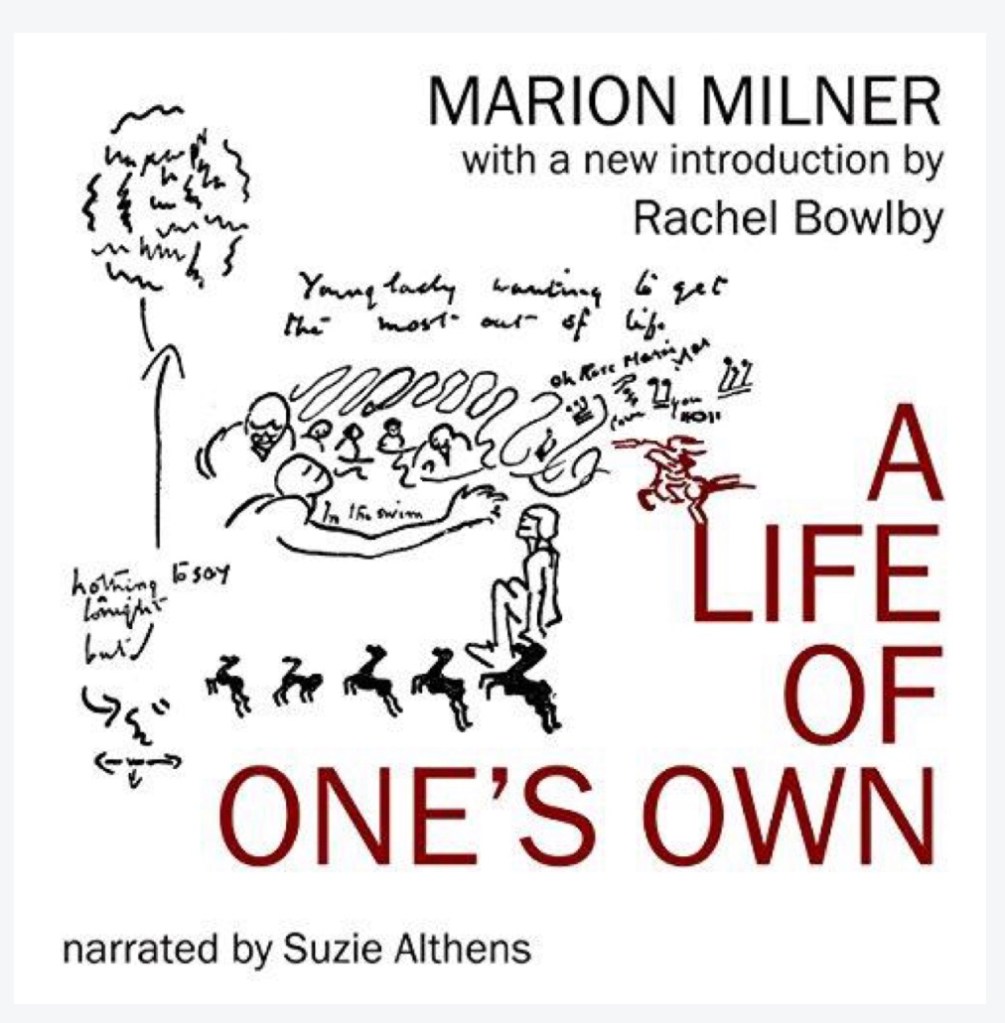
I found common ground with her, but first had to fearfully trudge through some things that made me leery. Automatic writing for one thing. I’d heard of this before from somewhere now misplaced in my mind, and as always it was credited to demonic activity, sigh. But I’d experienced in my own writing a mysterious sort of thing, that could be described in this way. Carl Jung and Milner described it was coming from the unconscious. Also, more recently “Thinking, Fast and Slow” By Daniel Kahneman.
In retrospect, the thing to be “worried about” is unchallenged thought. Which brings us back to the authority of the scripture:
3 For though we live in the world, we do not wage war as the world does. 4 The weapons we fight with are not the weapons of the world. On the contrary, they have divine power to demolish strongholds. 5 We demolish arguments and every pretension that sets itself up against the knowledge of God, and we take captive every thought to make it obedient to Christ.
2 Corinthians 10
Milner’s book starts off with a sort of Atheism, but she ends up finding and embracing her faith in God by the end of her journey, and much more. She started off what would later become her book by seeking to find out what made her ‘happy’. She started a journal to document her day to day, and the book is a publishing with commentary of that diary. She was a tribute to the modern day feminist woman, way ahead of her time. She was a woman in a man’s world, behaving like a man in order to be taken seriously. She’d sacrificed her femininity in order to be scientific. Abandoning intuition for logic, embracing the mind, and shunning emotion and/or feelings. Where she finds herself early on in the book is a person who doesn’t know what she thinks or feels about anything. Pulled this way and that way by the strong opinions of others.
5 If any of you lacks wisdom, let him ask God, who gives generously to all without reproach, and it will be given him. 6 But let him ask in faith, with no doubting, for the one who doubts is like a wave of the sea that is driven and tossed by the wind. 7 For that person must not suppose that he will receive anything from the Lord; 8 he is a double-minded man, unstable in all his ways.
James 1:5-8
Doubt in this case is refusing to believe one’s own mind. Yielding to God is spoken of immediately here, if you lack wisdom, ask God about it. This is referring to prayer, and to reading, studying, meditating on God’s word. The bible calls it “renewing of your mind”, another scripture comes to mind,
Therefore, I urge you, brothers and sisters, in view of God’s mercy, to offer your bodies as a living sacrifice, holy and pleasing to God—this is your true and proper worship. 2 Do not conform to the pattern of this world, but be transformed by the renewing of your mind. Then you will be able to test and approve what God’s will is—his good, pleasing and perfect will.
Romans 12:1-2
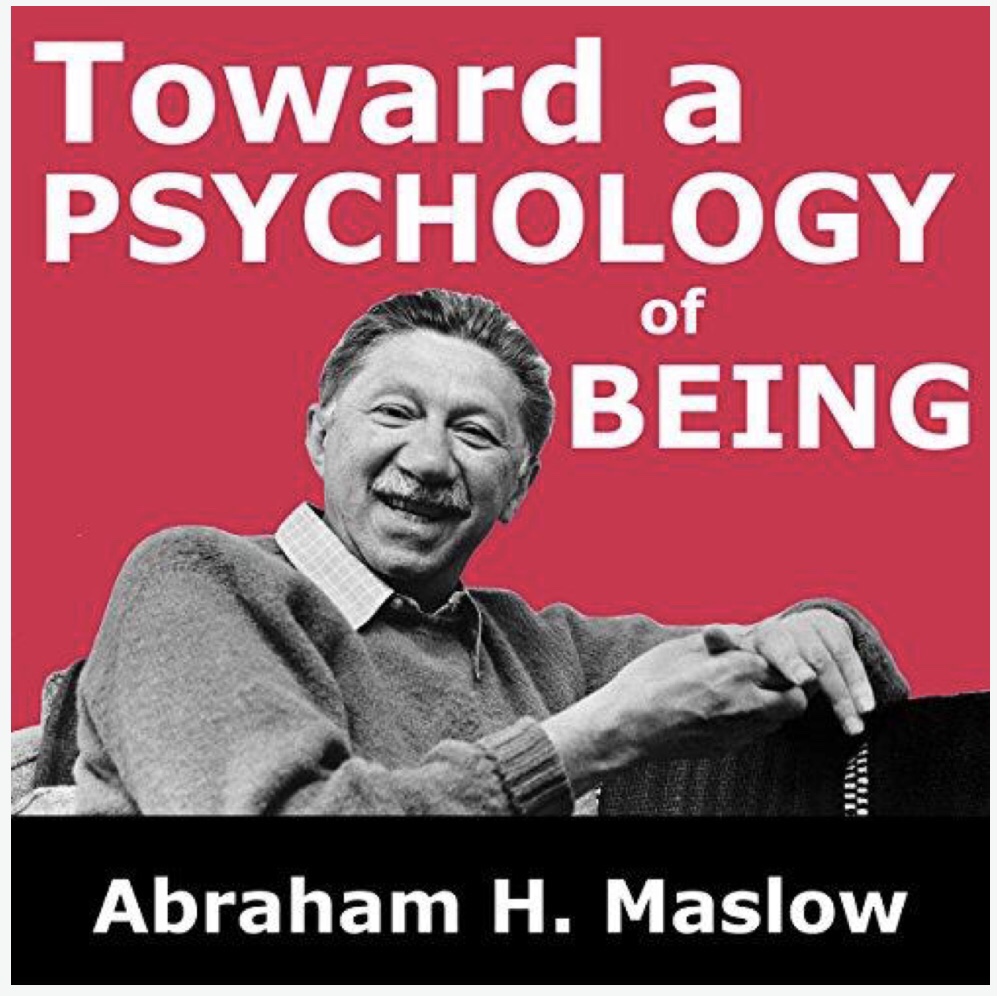
Maslow refers to becoming yourself as Self Actualization. He reiterates himself often, by that I mean he will uses different words to describe what he means, repeating the basic idea, but using different words. This is to rid himself of Lazy thinking, jargon, words that have lost their original meaning because them being associated with other publications. Self Actualization is a term he uses, but I seem to remember he himself did not coin the phrase. He deals with the words, SHOULD and OUGHT. He also talks about the various inner voices we all battle with, also known as our consciences… He doesn’t reject ALL that any previous author wrote about, but he does mention what he agrees with, and disagrees with. In coming to an understanding of who you truly are, he discusses at length all of the words associated with it. He uses the word Potentiality, for instance, to mean and refer to what is active in a child, before it is realized. Carl Jung talks about this in his book, The Psychology of Individuation:

If you recall where I noted above about my personality being cast in a negative light by that older couple, it was a Myers-Briggs personality test I came across through my older brother, Glenn, that was my first experience of being described in a positive light. If you take the test and answer the questions truthfully, rather than answering what you think you SHOULD be like, your results will reflect it. After the test you get a series of letters, each with a percentage, these correspond with ISFP for example, is “Introverted Sensing Feeling Perceiving” and that personality type is associated with a personality description. If you answered the questions truthfully, you’ll recognize yourself in the description. There is still room for individuality in all of this. But it serves a basic function to see who you are.
 Running Down Vimy