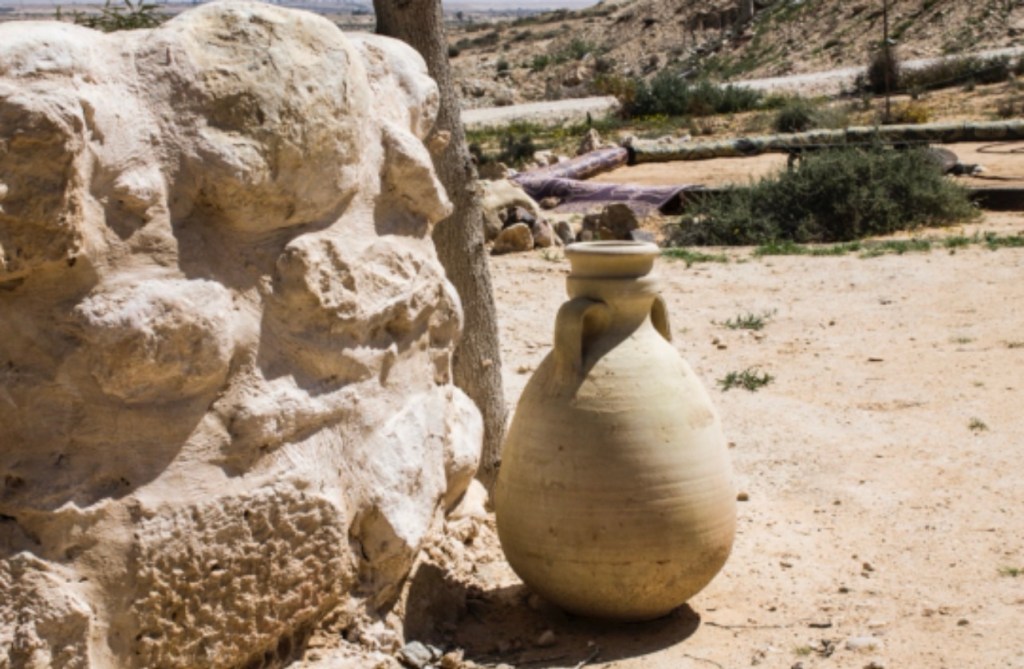
John 4:28 NLT
From chat > WHY ARE YOU HERE?
And what do you bring?
1. OPEN WITH THE QUESTIONS — DON’T ANSWER THEM
Imagine standing before the congregation.
Why are you here?
What do you bring with you?
Then immediately remove the pressure:
Perhaps you don’t know.
Story marker — Saul and the donkeys: 1 Samuel 9
Saul thinks he knows why he’s there: lost donkeys.
But behind the ordinary circumstances, God has already told Samuel:
“I will send to you a man…”
Saul arrives asking where the seer is, carrying a tiny payment.
Samuel sees something Saul cannot yet see.
Question to leave hanging:
What if you don’t yet know what you brought?
⸻
2. THE WOMAN BROUGHT A BUCKET
Story marker — John 4
Don’t begin with her brokenness.
That’s exactly what you caught yourself doing in your journal:
What did she bring? Brokenness?
Yes—but Scripture introduces something much more ordinary.
She brought a bucket.
And Jesus, genuinely weary and thirsty, says:
“Give me a drink.”
She has something Jesus doesn’t have at that moment.
No hierarchy needs to be announced.
Then the encounter changes her.
She came carrying the bucket.
She leaves the bucket behind.
And she carries testimony instead.
Her testimony then brings Samaritans to Jesus, until eventually they can say:
We have heard for ourselves.
Story marker — Luke 11:27–28
Blessedness isn’t reserved for the impressive, famous or specially positioned.
Hear the word of God and keep it.
Live-conversation question:
What ordinary thing might someone already be carrying that God can use?
⸻
3. PERHAPS THEY HAVE THE BUCKET
Now interrupt the entire idea of a “care ministry.”
Romans 1:11–12.
Paul begins:
I want to impart something to you…
and then qualifies it:
that we may be mutually encouraged by each other’s faith, both yours and mine.
That’s the centre.
Not:
caregiver → needy person
but:
members one of another.
Romans 12:5.
Story marker — the second drunk passenger
Blind drunk. Gets on the wrong bus. Passes out behind you. Wakes up asking for Hastings.
This time, because of what happened a month earlier, you respond differently.
You apologize. Give him a transfer. Help him find the correct bus.
And then the supposedly helpless drunk man pats you reassuringly:
“There, there.” 😂
The passengers:
“What just happened?”
Exactly.
You thought you were helping him.
And suddenly he had something to give you.
⸻
4. PAY ATTENTION TO ME → I AM PAYING ATTENTION TO YOU
Now tell the WAM story correctly so ChatGPT doesn’t invent another acronym. 😑😂
Fourth-born of five.
WAM — WHAT ABOUT ME?
“Pay attention to me.”
Don’t diagnose yourself. Don’t turn childhood into a neat causal explanation.
Just put it on the table.
Something about knowing the desire to be seen has become, through decades of formation, sensitivity to the person who isn’t being seen.
PAY ATTENTION TO ME
becomes increasingly:
I AM PAYING ATTENTION TO YOU.
Story markers — Gavin / Gerard
Normally vibrant Gavin suddenly isn’t himself after his sister dies.
Gerard seems different while leaving church.
You notice.
Not diagnose.
Not fix.
Simply:
“How are you?”
And then listen.
⸻
5. NOTICING IS NOT THE SAME AS KNOWING
This belongs immediately afterward.
Story marker — 7-Eleven greeting
Staff greet the person entering because the response provides information.
The greeting is both hospitality and awareness.
But:
Behaviour is information. It is not necessarily explanation.
That principle protects everything you’re talking about.
A person looks angry.
A person is silent.
A person is sitting alone.
A person doesn’t make eye contact.
A person suddenly stops attending.
Notice it.
But don’t immediately write their story for them.
John 4: sit and listen.
⸻
6. SOMETIMES NOTICING REQUIRES BOUNDARIES
Story marker — Easter Sunday / Barry / Gavin
Barry greets the man entering church.
Because Barry actually notices him, he hears the violent muttering.
You notice too.
You and Barry pray.
Others become aware.
The man goes to the front.
Gavin brings something different to the situation: serious security/intervention experience.
Pastor and others contribute.
Eventually the man is lovingly but firmly escorted outside, prayed with, and told:
Come back when you’re sober.
This is important because otherwise “noticing” can become sentimental.
Love doesn’t mean everyone gets unrestricted access to everyone else.
Sometimes:
sit beside them.
Sometimes:
pray.
Sometimes:
listen.
Sometimes:
get Gavin.
Sometimes:
you cannot remain here in this condition.
Different members bring different gifts.
Nobody has to be everybody.
⸻
7. WALK AND LISTEN — EMMAUS
Luke 24
Jesus joins two people who are going the wrong direction in more ways than one.
He knows.
They don’t.
And Jesus asks:
“What are you discussing together as you walk along?”
They explain Jesus to Jesus. 😄
And he lets them talk.
Walk and listen.
Then comes your second discovery.
Jesus appears ready to continue down the road.
They say:
Stay with us.
They don’t know they’re welcoming the risen Christ.
They think they’re offering hospitality to a stranger.
Story markers — Genesis / Lot / Judges 19 / laws concerning strangers
Your handwriting project has made you sensitive to the biblical weight of hospitality.
The stranger may not merely be the object of ministry.
The stranger may be carrying something we need.
⸻
8. “WHY WAS I INTRODUCING MYSELF?”
Story marker — Kevin’s celebration of life
You enter completely unknown.
Your instinct is to introduce yourself rather than quietly find a chair.
Eventually you discover something painful and fascinating:
These people knew Kevin intimately for 8–10 years.
But when you say you’re Cheryl’s husband:
“Who’s Cheryl?”
Kevin’s family of origin appears to have remained almost entirely outside this world.
Don’t explain why.
You know the painful history of his family of origin, and you wonder whether it mattered.
But leave the question open:
“Kevin, why had we never been here?”
And notice something else:
You walked into that house as a stranger.
Your instinct was:
make connection.
That’s something you bring.
⸻
9. GOD KNOWS HOW TO GET THINGS DONE
Now return to Saul.
1 Samuel 9:15–16
Saul experiences:
lost donkeys → searching → servant → quarter-shekel → girls at the well → Samuel.
Samuel has been told:
“I will send you a man.”
This is where your Romans 1:21 belongs deliberately, not accidentally. 😑
The negative description becomes a question about your own posture:
Will I acknowledge him as God and give thanks?
Then:
Ephesians 1:11 — God works all things according to the counsel of his will.
And carefully:
Judges 14:4 — sometimes God’s purpose is operating where the participants themselves don’t perceive it.
Your conclusion isn’t:
“Therefore I can decode why everything happened.”
It’s almost the opposite:
God knows how to get things done even when I don’t understand what he’s doing.
⸻
10. GOD IS NOT LIMITED BY EVIL
Now Romans 8:28.
Story marker — Pastor Jay and the ladder
Do NOT say:
God pushed Jay off the ladder because God wanted to teach him something.
Jay himself has challenged that interpretation.
The accident cost him something real, including sight in his left eye and consequences for his vocation as builder/contractor.
Don’t call the evil good.
Instead:
Evil, accident and suffering don’t get veto power over God.
God can work in, through and despite what happened.
And Jay’s testimony becomes:
“He was with me through it.”
Not:
“I decoded why God did it.”
That distinction belongs at the heart of the post.
⸻
11. THE PERSON IN FRONT OF ME MAY BE SOMEONE GOD SENT
Bring Saul and the Samaritan woman together now.
Not as identical callings.
As encounters.
Samuel doesn’t know Saul personally—but God says:
I’m sending someone.
The woman doesn’t know who sits at the well.
The Emmaus disciples don’t recognize their companion.
Ananias knows exactly who Saul is and would rather not go near him. 😂
Acts 9: “Go.”
So perhaps before categorizing the person:
newcomer
needy
troubled
grieving
addicted
potential volunteer
care recipient
ask:
Who has God brought in front of me?
And:
What might they be carrying?
⸻
12. DON’T ANNOUNCE THE INNER MACHINERY
This matters especially for you.
You often perceive something before you’ve articulated why.
Don’t quench that.
But test it.
1 Thessalonians 5:19–21.
You don’t necessarily need to tell Gerard:
“God told me you’re struggling.”
You can say:
“Gerard, you seem quieter today. How are you?”
The prompting can remain between you and God.
And this is where your sensitivity to listeners belongs too.
While speaking with Mark, you may notice:
He’s interested.
He’s pulling away.
I’ve lost him.
He doesn’t agree.
Those are thoughts and perceptions, not yet facts.
Notice them.
Don’t automatically obey them.
Perhaps ask:
“Mark, what’s happening for you as I’m saying this?”
Now you’ve turned your sensitivity from mind-reading into relationship.
And that is Romans 1:11–12.
⸻
13. DON’T BUILD THE MINISTRY YET
Brennan Manning: codify.
T. S. Eliot: don’t formulate the living thing until you’ve pinned it beneath glass.
Parker Palmer: don’t rush to resolve tension merely because unresolved tension is uncomfortable.
Your backpack contains dozens of names.
Each is a story.
So perhaps Mark isn’t assembling 50 people to receive the program.
Perhaps he’s gathering people to ask:
What have you noticed?
What have you learned?
Tell us your stories.
And then listen for what is already emerging among them.
⸻
14. BUILT TOGETHER
Now finally return to your central image.
Ephesians 2:22
“In him you also are being built together into a dwelling place for God by the Spirit.”
This isn’t fundamentally:
Laurence’s ministry.
It isn’t even:
Mark’s care-leader system.
It is:
God building a people together.
And therefore the net isn’t:
Pastor → 50 leaders → 300 recipients.
It’s:
members one of another.
People noticing people.
People receiving from people.
People knowing when to speak.
People knowing when to listen.
People knowing when to get Gavin. 😄
People knowing:
NOT ME.
Paul plants.
Apollos waters.
God gives the growth.
⸻
CONCLUSION — RETURN TO THE PODIUM
And now I think you finish exactly where you started.
Imagine yourself looking over the congregation.
Don’t preach the answer.
Ask:
Why are you here?
Pause.
What do you bring?
Pause again.
And then perhaps:
Maybe you don’t know yet.
Saul didn’t.
The woman at the well didn’t.
The Emmaus travellers didn’t know whom they’d met.
Ananias certainly didn’t understand everything God was doing with Saul.
And perhaps the person sitting beside you doesn’t know what they carry either.
So:
What would happen if we became a church curious enough about one another to find out?
Not What can I do for you?
Not even only What can you do for me?
But:
“…that we may be mutually encouraged by each other’s faith, both yours and mine.”
— Romans 1:11–12
And then your final image:
She came carrying the bucket.
She left the bucket behind.
She carried testimony instead.
And somewhere between those two moments, Jesus asked her for something she already had.
That, Laurence, is where I’d stop.
Don’t explain the bucket afterward.
Leave it sitting beside the well. 🥲

