Scripture: Exodus 14:5–14
An edited transcription of Pastor Katlyn Allen’s message at River Valley Church. The spoken wording has been preserved as closely as possible, with corrections to obvious transcription errors, punctuation, and paragraph divisions. Section headings and brief summaries have been added for navigation.
Video of message
Contents — The Message at a Glance
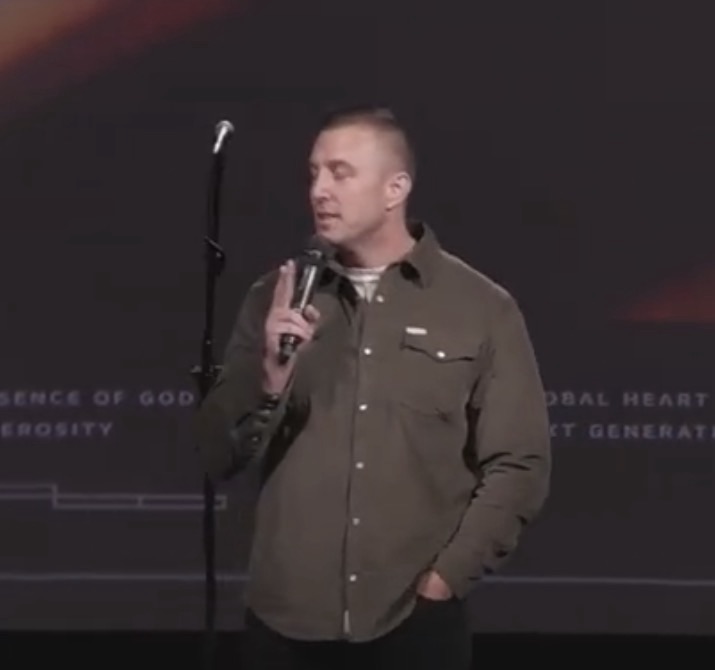
Pastor Katlyn Allen River Valley Church — November 15, 2026
1. A Warm Welcome and the Presence of God
Katlyn begins by expressing his affection for Pastor Bisch and Haley, acknowledging the profound presence of God in the gathering, and sharing a humorous observation about the church’s coffee.
2. What Is Causing You Anxiety?
From education and parenting to politics, finances, and the constant flow of information, Katlyn asks what is keeping us awake at night.
3. What If Our Response Were Different?
He proposes that worry and anxiety are connected to trust and asks whether followers of Jesus might respond differently to the world’s uncertainties.
4. Who or What Do You Trust?
From the serpent’s question in Eden to the confession of faith in Jesus, Katlyn traces the importance of trust in our relationship with God.
5. God’s Promise, Provision, and Power
The Israelites have witnessed God’s deliverance through the ten plagues, yet find themselves trapped between the Red Sea and Pharaoh’s army.
6. The Same Circumstances, Two Responses
Moses and Israel face the same danger, but their responses differ: fear and blame on one side, confidence in God on the other.
7. The Temptation to Return to Egypt
When the future becomes frightening, familiar bondage can seem preferable to an unknown freedom.
8. The Lord Will Fight for You
Moses’ instruction to be still challenges our instinct to fight, flee, strategize, or manufacture a solution.
9. When Activity Is Not Progress
Drawing from his experience with a trauma therapist, Katlyn considers the relationship between anxiety, the nervous system, and our compulsion to act.
10. When There Is Nothing You Can Do
Katlyn shares the personal circumstances of his father’s upcoming double-bypass surgery and his mother-in-law’s cancer diagnosis.
11. Silence, Solitude, and Trust
He invites the church to rediscover stillness and consider whether spiritual progress sometimes looks like quiet rather than activity.
12. Do You Trust Him?
Katlyn returns to his central question, challenging listeners to trust Jesus with their futures, finances, relationships, and circumstances.
13. Closing Invitation and Prayer
The sermon concludes with an invitation to surrender worry to Jesus and, for some, to trust Him for the first time.
1. A Warm Welcome and the Presence of God
Wow, it’s so good to be here.
I was at Bish’s house last night, and we were trying to figure out how long we’ve known each other. And I want to say it’s somewhere in like 11 or 12 years that I’ve known Pastor Bish and Haley. And so, what a joy to be at River Valley.
Two amazing things have already happened for me this morning.
One, the presence of God is profoundly in this place.
And the other thing is, your coffee is spectacular!
My wife was leaning over the whole worship, and I thought she had a word for me, but instead she’s like, “Isn’t this coffee so good?”
And she’s like, “It’s also so strong.”
And I was like, “Did you go dark roast?”
I was like, “I went the dark roast.”
So whoever makes the coffee—who makes the coffee?
Simone, you make the coffee? You did it good. You did it good. It’s still hot!
What a joy to be with you at River Valley, and what the Lord has been doing in your community the last few years. Such a joy to be with you this morning.
2. What Is Causing You Anxiety?
Let me ask you a question.
What is causing you anxiety these days?
We weren’t ready for that this morning, were we?
The world. I agree.
Man, what’s causing us worry, and what’s causing us anxiety?
And maybe for some of our younger people in the room, it’s like your future, your education, the things you’re putting your hand to these days, right? Like the things that you’re investing your time and finances into—your school and stuff.
But maybe for some of us older people, it’s what I’ve already heard from the front here. It’s like the world, right? Policies and politics and presidents and all the things. The finances, the housing market.
I mean, I come back into the Lower Mainland, and the only thing people want to talk about is housing.
What are the things that are causing you worry and anxiety in your life these days?
And maybe for some of you, it’s your parenting, like raising a child.
You know, I never had so much worry until I had a daughter. And then I’m like, now I have so many other worries that I never had.
And then there’s other people that are on the other side of that.
But what is causing you your worry and your anxiety?
We’re living in a time where we’re seeing, even in a young generation—there’s this new book that came out in the last couple of years called The Anxious Generation.
It’s a whole book just about—it’s not a faith-related book, but it’s a psychology book about what’s happening to this generation, that we’re witnessing this highly anxious generation.
And I’m a millennial, so I grew up in the ’90s.
And in the ’90s, my biggest worry, Bish, was what holographic Pokémon card I was going to trade. That was my biggest concern that kept me up at night.
And now we have a generation of young people that are anxious about their future and about the climate and about their school and about their sports, and panic attacks before their competitions.
And how can we not?
We are living in a time that information is coming so quickly at us. And the clickbait and the information and the headlines and the scrolling.
And I don’t think the Lord wired us to navigate and consume so much information.
I’m having a good day until I start scrolling, and I’m having a terrible day. I don’t know how many are like that.
I’m not stressed until I open my phone, and then I get stressed.
Until Outlook goes down this past week, and then my stress disappeared for some reason. I was like, “This is a great week! Praise the Lord!”
But that’s the thing. What is keeping us up at night?
We stay up, and I don’t know if you’re like me, but you stay up, and your brain is going, and you’re coming up with solutions and outcomes and strategies and things to do that you’re worrying about.
“Well, if I just do this, or if I just get into that, or if this just would happen here, then that would be…”
And we sit and we strategize, and we try to think of what’s going on and how we can get on the other side of it.
3. What If Our Response Were Different?
But what if, friends?
What if you and I, as people who apprentice to Jesus, who are following Jesus, what if you and I and those that have come to know Jesus rewrote the narrative of our generation?
Like, what if our response to the world was different than the world?
What if my response to what’s happening in the world is different than the response of the world?
So here’s my thesis this morning that I want to present to you today, and I want to unpack it.
Could it be, friends, that our anxiety and our worry is correlated and connected to our level of trust?
Okay, watch.
Could my worry actually be connected to my trust?
So then that leaves us with this question:
Who do you trust, or what do you trust?
So my worry and anxiety is somehow connected to what I trust.
And trust me, we do. You don’t even need to be a believer of Jesus.
Look how many people trust in their certain politician. “Well, if that person just gets in, then it’s all going to be good because I trust that person, their platform, and their party.”
You don’t even need to be a follower of Jesus to know that your worry is correlated and connected to what you trust.
So the question is, what do you trust?
Do you trust yourself? Do you trust your government with their policies and politics? Or do you trust your friends, your finances, or your own efforts?
My algorithm got to a place where I was getting these motivational speeches where people are like, “Just do it yourself. Find it in yourself.”
And there’s a moment I’m like, “Yeah, I can hear that,” you know?
And there’s this famous SEAL guy who’s bald, and I don’t know his name, but he’s like—I know some of you will know—but he’s out there like, “Just find it in yourself. Just dig deeper. Find the grind.”
And I’m like, “Yeah!”
And then I get tired by three. I’m like, “My grind’s over. I’m tired.”
It’s like, I don’t got any of me, you know?
At nine in the morning, I’m like, “I got it today!” And then by 2:30, I’m like, “I’m good. My grind’s over today.”
And it’s like, “Find the side hustle.”
And I’m like, “I’m trying, but it’s just nine, and I just want to do that. How much more must I hustle today?”
What do we trust?
So what if, as followers of Jesus, our response to and engagement with worry and anxiety has to be different than the world?
And here’s why: because of who you and I should trust.
What if it’s different because of who we should be trusting?
4. Who or What Do You Trust?
Your apprenticeship to Jesus, your discipleship under Jesus, comes down—there’s only one thing going on, which is trust.
That’s all that’s going on, friends. That’s all that’s happening with Jesus.
We can go to Genesis chapters two and three.
In Genesis two and three, we have Adam and Eve, and they’re in trust, perfect unity, harmony. Everything is the way in which God designed it.
What gets sown is mistrust.
The serpent, the sly serpent, comes to Eve, and he poses a question to her that sows mistrust.
He says, “Did God really say?”
And in that moment, the sly serpent plants a seed of mistrust.
Do you trust what He said? Do you trust what He’s actually trying—the outcome of that? Do you really trust what He said? Did He really mean what He meant?
And he sows mistrust.
And so now Eve is questioning, “Did He actually say that? Do I trust what He said? Do I trust that He has the best intentions for me? Do I trust His sovereignty? Do I trust His plan? Do I trust Him?”
And now mistrust is sown.
That’s all that’s been going on.
If you come to a place where you said yes to Jesus, it’s because you got to a place where you said, “Yes, Jesus, I trust You. I trust Your gospel. I trust what You’ve done on the cross. I trust that You’re good for it. I trust You.”
Everything that’s going on, everything comes down to trust.
Any relationship is built on trust, is it not?
If you’re married, your marriage is built on trust. I trust that you’re faithful. I trust that you got me. I trust that you’re going to support me.
What are vows? Vows are statements of, “I trust that you’re going to do these things.”
Any friendship, any parenting relationship is built on trust.
What do we see on the global scale? It’s just mistrust.
“I don’t trust that they’re not building something over there. I don’t trust that they’re not doing this. I don’t trust that they’re not…”
Everything in our relationship with Jesus comes down to trust. That’s all that’s going on.
And I love when, in Psalm 20, it says:
“Some trust in chariots and some in horses, but we trust in the name of the Lord our God.”
Psalm 20:7
Trust in my finances, my power, my own ability? I’m like, no, no. We just trust in Jesus.
And that’s all that’s been going on.
So this morning, I want to take us to a text to unpack this thought.
5. God’s Promise, Provision, and Power
I want to take us to the second book in our Scriptures called Exodus.
I don’t know if you have it with you, if you bring it on your phone, or you rely on me, but I will read it for you.
We’re going to go to the 14th chapter. We’re going to start in verse five.
But as we go there, let me just give you the real context.
The people of God, the Hebrew people, have come into Egypt. They first came in on favour, under Joseph. They come in, but then under a new Pharaoh and under new leadership, a new generation, they’ve lost that favour.
They become slaves, and so God raises up somebody named Moses.
God wants to bring deliverance through his leadership, and so God does all the work. He just asks him to trust Him.
God wants to free His people, so He does ten plagues, ten really supernatural, miraculous moves of God, demonstrating His provision and power.
And so He does these ten things, and ultimately, after the tenth one, Pharaoh releases the people to go.
And God has made a promise to the people that they’re going to go to a promised land, a geographical location where He’s going to fulfill His promises that they are going to have their own land.
And so we’re at this moment where they’ve left Egypt, but they have not yet arrived at the promised land.
And in the 14th chapter of Exodus, we join up with the Hebrew people on the shores of the Red Sea.
Thank you. The hospitality here is amazing.
Okay, are we there? Chapter 14.
This is what it says:
“When the king of Egypt was told that the people had fled, Pharaoh and his officials changed their minds about them and said, ‘What have we done? We have let the Israelites go and have lost their services!’
So he had his chariots made ready and took his army with him. He took 600 of the best chariots, along with all the other chariots of Egypt, with officials over all of them.
The Lord hardened the heart of Pharaoh king of Egypt, so that he pursued the Israelites, who were marching out boldly.
The Egyptians—all Pharaoh’s horses and chariots, horsemen and troops—pursued the Israelites and overtook them as they camped by the sea.
As Pharaoh approached, the Israelites looked up, and there were the Egyptians, marching after them.
They were terrified and cried out to the Lord.
They said to Moses, ‘Was it because there were no graves in Egypt that you brought us to the desert to die? What have you done to us by bringing us out of Egypt? Didn’t we say to you in Egypt, “Leave us alone; let us serve the Egyptians”? It would have been better for us to serve the Egyptians than to die in the desert!’
Moses answered the people, ‘Do not be afraid. Stand firm and you will see the deliverance the Lord will bring you today. The Egyptians you see today you will never see again.
The Lord will fight for you; you need only to be still.'”
Exodus 14:5–14
So God gives them a promise while they’re in Egypt.
The promise is land, prosperity, land flowing with milk and honey.
And He proves His promise through His provision by power, demonstrating through ten plagues, right? Ten supernatural moves of God.
He gives them a promise. He provides, or brings provision to that promise, by demonstration of His power.
Pretty trustworthy guy, right?
Like, You’ve declared something, You’ve delivered it, and You’ve done it. You’ve done it through signs and wonders.
And because of that, Israel is released from bondage and slavery.
And what God said He would do, He did.
Trustworthy, right?
6. The Same Circumstances, Two Responses
But on the shores of the sea, they have found themselves in a highly anxious moment.
And in their worry, they lose trust, or they have mistrust.
So Moses and Israel are in the exact same situation, right?
Both are on the Red Sea. Both are on the shore. Both have an impassable sea in front of them. Both have an army behind them.
And there’s two different responses.
One response is worry and anxiety and blaming, and the other is confidence because he knows who he trusts.
Same circumstance, two responses.
Verse ten: As Pharaoh approached, the Israelites looked up, and there were Egyptians marching on them. Overwhelming.
They’re terrified.
They say to Moses, “Was it because there were no graves in Egypt that you brought us out here? What have you done to us?”
This is what happens when one person trusts the Lord and someone doesn’t.
They look at it and they say, “You’ve done something foolish. Leave us alone.”
They said, “Just let us serve them. It would have been better for us to serve them than to die in the desert.”
So in their mistrust, they start to blame, and they scapegoat Moses.
“Moses, what have you done to us?”
Wait, wait, wait!
But aren’t these the people of God?
Aren’t these the people that are supposed to be trusting God?
Aren’t these the people that just watched God’s power and provision to bring them a promise?
And He’s done all that, and at one point they celebrate it, and now they’re full of mistrust.
And they say, “Leave us alone. Just let us be slaves. It would have been better for us to serve the Egyptians than to die in the desert.”
And here’s the temptation Israel faced, and that you and I face:
Leaving Egypt behind in our lives is harder than we realize.
7. The Temptation to Return to Egypt
It’s why you and I will go back to old patterns and old habits and old relationships and old ways of doing things, because leaving our Egypt is often harder than we realize.
We return to the familiar because the familiar brings a sense of comfort in a moment that is uncomfortable.
They are in a very uncomfortable moment.
We can’t get past the sea, but we also can’t turn around because there’s chariots and soldiers and warriors.
And in that moment of what is uncomfortable, they want to go back to what was comfortable, what was familiar.
Because they don’t trust Moses. They don’t trust God.
So they trust what they know more than they trust who they know.
They trust what they know.
They know what to expect in Egypt. It’s hard. They’re slaves. They’re under bondage. They know that.
But they trust what they know, even though it’s bondage, more than they trust who they know in the unknown.
So when we face fear, we become anxious. We often go back to what’s familiar.
But here’s the thing: their reality doesn’t change if they were to trust God, but the response to the reality can change if they trust God.
There’s a sea in front of them, an army behind them.
Israel is trusting what they know instead of trusting God and who they know.
At least I know what I’m getting in Egypt. They know how it’s going to go. They know what’s going on there.
Rather than trusting God, because they can’t see past the impassable sea, they can’t see past what would be their death and demise, what they think.
So what is the source of their anxiety?
It’s fear.
Israel is more afraid of the unknown than they are of Pharaoh.
Their anxiety and fear of what they can’t see is greater than being a slave.
We’re afraid of what’s on the other side.
So in their mind, what’s before them is death, an impassable sea. What’s behind them, an army, is death.
And they’re bound by fear.
So in their fear, they let their fear lead them back to bondage.
I’m afraid, so I’d rather go back to bondage and slavery. I’d rather go back under the oppressive hand of Pharaoh than face the uncertainty, because I trust what I know more than I trust who has made promises in my life.
But this does not sound like you and me, though.
Except we word it this way:
“Oh no, but what if?”
“No, no, but what if, God?”
You sense God has something for you in your life. You sense that God has a promise for you.
But then we go, “No, but what if, God? I want to trust You, but I don’t know what’s on the other side of this for me.”
“I don’t know what’s on the other side of this relationship, or the other side of me leaving this position. I don’t know what’s on the other side.”
“But what if I leave and it doesn’t work out? But what if I make this decision and it puts me in this position?”
Or I’m afraid of what’s ahead of me, so I’m just going to stay in what’s familiar, even though it might be a place of bondage.
I’m afraid to take a risk because it’s an unknown.
So what does Moses say?
They, in their mistrust, blame Moses. They blame God. They want to go back to bondage because it’s familiar and it’s comfortable in what is an uncomfortable situation, which is what so often you and I do.
But what does Moses say in chapter 14?
He says, “The Lord will fight for you. You need only be still.”
8. The Lord Will Fight for You
Okay, when the Lord first showed this to me, I was working through some trauma in my life, and so I was seeing a trauma therapist.
And I remember on one occasion, I go to my meeting with her, and she sits down, and you know how they be.
I wish I had a story, but she sits a certain way, like while she leans in, and she says, “Tell me about your day, Katlyn,” because she just wants to start, right, like surface level, and then they have their methods so they get you going and sharing.
And I said, “How’s your day?”
She’s very calm. She’s very—right? They have a great demeanour.
Then there’s me.
“My day’s been really good, you know. I was just—I was sitting there dropping off, and then I was—and then I was out there. It was going good, but it’s kind of crazy right now.”
And then she’s like, “Oh, Katlyn, Katlyn, just take a breath.”
“Katlyn, can you just stop?”
She didn’t yell. She’s like, “Katlyn, why don’t we just bring it down a second?”
She’s like, “You know what, Katlyn? I just sense we’re going to do some deep breathing today.”
I said, “Ma’am, look, I’m a man of faith. I don’t do the New Age stuff. I can’t do no deep breathing.”
And she’s like, “No, no, it’s just biology. It’s just biology.”
She says, “We’re going to do some deep breathing because we need to engage with the parasympathetic nervous system, which is your state of rest, because right now you’re operating off your nervous system.”
Because she read it all over me, right?
When the Lord—I, in that moment, I later come to read this, and I realized what was happening with Israel was they’re operating off their nervous system.
Watch this.
You know, in your nervous system, you either fight or flight, right? We know this.
Israel’s on the seashore. They can’t flee. Why? Because there’s an impassable sea.
But they also can’t fight because, well, it’s an army, and they’re not.
But they have all this pent-up—because they’re in a place of anxiety and worry, so their nervous system is like, “We need to deal with what is causing us a position of threat, and so we need to do something.”
But it’s like, “Well, I can’t flee, but I also can’t fight.”
And so they have this thing, and they don’t know what to do with it. They have all this commotion, emotion, and energy, and it’s just bound up, but nothing to put it to.
And here’s Moses.
He says, “The Lord will fight for you. You need only be still.”
Take a deep breath.
Because they couldn’t flee, they couldn’t fight.
And when I’m anxious, I have to put my energy to something, so I start to plan and strategize and think of outcomes and solutions.
But here’s the reality:
Just because I have motion and activity does not mean I have progress.
9. When Activity Is Not Progress
Because this is how I am, and maybe some of you are like me.
But when I get worried, I just want to start doing things.
Because I get stressed. I’m like, “I need to work on something. I need to do something. I need to put my hand in something. I need to figure this out.”
And let’s be honest.
When we’re in a place of worry and anxiety and stress, the things that we just start to do for the sake of doing, because it makes us feel better, because all of a sudden we’re either fleeing or fighting, and our nervous system is responding, they’re often not the best decisions.
Because they’re made, they’re coming from a place that we have not considered and thought and trusted.
But instead, he says to Israel, “Stop. Can you just be still and trust the Lord?”
In other words, can you just take a deep breath?
Can you imagine a deep breath with a sea in front of you, an army behind you, and he says, “Be still.”
Don’t try to assemble yourselves into rafts. Don’t try to put yourselves into a fighting march. Like, just stop. Just stop.
Is that not the hardest thing to do when you’re worried and anxious?
Because my brain is going crazy. I need to strategize an outcome to my problem. I need to figure this out.
What am I going to do? How am I going to position my finances and my energy? How can I problem-solve this?
And then I realize that there are so many things I cannot problem-solve.
And sometimes in life, you’re just like, “I don’t see a way out of this one. I don’t see a way out of this one.”
“I just see a sea and an army, and I’m just trying to strategize.”
How many of us have been there where it’s like, “But what if, God?”
We start blaming things. We blame the economy. We blame family. We blame our world. We blame so many things, just like Israel did when they blamed Moses.
But he says, “Just be still.”
And what is the greatest sign of trust?
It’s when we say, “I’m not trusting myself in this one, Lord, but I’m trusting You.”
“And there’s literally nothing I could do in this situation that could bring deliverance, and so I need You to do it.”
“So I’m just going to be still, and my stillness is a sign of faith.”
When a world would say, when things are going awry, work harder, work faster, do more, monetize your time, do all of this.
And then what if—what if people, like when I started, I said, what if we have to engage a world differently than the world?
What if, when we’re anxious and worried, we’re like, “You know what? I’m just going to be still because I need to trust the Lord on this one.”
10. When There Is Nothing You Can Do
Can I—like, in my life, this week, my dad…
Sorry, guys.
So I grew up as an atheist. My whole family, no one believes except for me.
But my dad this week, on Tuesday, is doing open-heart surgery, double bypass.
There’s nothing I can do.
I can’t strategize my way out of this one. I can’t network my way out of this one, right?
Like, I can’t.
And then this week, my wife’s mom got a diagnosis of cancer.
And I was strategizing. Like, “Okay, we’re going to move back. We’re going to figure out the money. I’m going to figure out the housing.”
And it’s like, there’s actually nothing I can actually do to solve the cancer, right?
So I can strategize certain things, but it’s like it actually ultimately doesn’t solve it.
So in my worry, because I’m a little worried, right, in my worry, I’m reminded, as I was even working on this, this was a word even for me.
I’m just sharing the word I got for myself with you.
Because the Lord was reminding me this week when I was looking at this. He’s like, “There is nothing you can do about a double bypass. You ain’t going to be in the surgery room. You ain’t got the wisdom. There’s nothing you can put your hand to that’s going to solve that.”
With my mother-in-law’s diagnosis of cancer, it’s like there’s nothing I can do.
And I’m like, “Lord…”
And I have this nervous—I’m like, “Who can I fight?”
Right? Like fight, fight. Not physically fight, but like, “What can I do? What can I do?”
It’s like, I can’t. I just can’t do anything.
He says, “What if? What if you were still in your worry and your fear and your anxiety? What if you were actually just still?”
11. Silence, Solitude, and Trust
This is why the spiritual practice of silence and solitude is so helpful, that our generation of Western believers have forgotten about.
When Jesus would go into silence and solitude, He would leave the craziness, right, for silence and solitude, because He knew that there’s something in that space that He was getting.
One of my favourite pastors and authors, John Mark Comer, just released a new book, In the Quiet, because there’s this rediscovery of when the world is anxious and there’s just so much motion, it doesn’t actually mean we have progress.
What if progress actually looks like stillness and quiet, silence, solitude?
And the world says that’s not proactive. “Be proactive!”
Wait, how much do we hear that? “Be proactive.”
It’s like, “I am being proactive in the Spirit when the Spirit is telling me just be quiet.”
Hallelujah.
12. Do You Trust Him?
Just let me close with this thought.
I want to end with the question I started with:
Who do you trust?
Do you trust in chariots and horses?
In other words, do you trust in the things that your hand has or could have? Or do you trust in what the Lord is doing?
Do you trust Jesus?
Do you trust that His promises are true, that He could provide for the promise that He’s already declared, and He would do it by His power?
And what do you do when you’re worried and you’re anxious, right?
Do I strategize? Or I will stay awake at night, getting little sleep because I’m strategizing in my brain?
And Lord, I say, “Lord, I just…”
It looks like foolishness to the world, right?
But I say, “I’m going to be still, trusting in a season that should have, could have, does have lots of stress, anxiety, worry.”
“But in my worry, I’m going to trust You.”
Because all that’s going on, friends, is trusting.
That’s all that’s going on with Jesus.
It’s what’s been going on since the beginning. It’s what’s going to go on.
It’s why the Scriptures constantly provoke us towards trust.
Do you trust Him?
So I just want to close with that question.
Do you trust Him? Do you trust Jesus?
Do you trust Him with your future, your finances, your plans, your education, your school?
Do you trust Him with our country? Do you trust Him with the world? Do you trust Him with things going on?
The question is, do we trust Him?
And maybe there’s something going on in your life, like me, that’s going on in my life.
Maybe there’s something in your life that’s going on that you’re like, “I need to be still. The Lord’s going to fight for me, and in my stillness, I need to trust the Lord.”
“And by being still, that’s my sign of trust. I’m going to trust the Lord.”
Maybe there’s some of you here this morning that you have yet to put your trust in Him for the first time.
Like, “Okay, I’ve been exploring, I’ve been coming, doing that, but I haven’t actually ultimately trusted Jesus with my future and my life and my soul and my destiny, my destination. I haven’t been actually trusting Him with that.”
So maybe for some of you, just this morning, just as we get ready to close, maybe there’s just something that you know has been keeping you up.
When I opened with the question, “What’s keeping you awake at night? What’s causing you worry and anxiety?”
What is that thing that immediately comes to your mind?
Maybe that’s the thing the Lord’s inviting you right now just to, like, “Trust Me. Trust Me with this.”
Or maybe for some of you, like I said, it’s just for the first time.
It’s like, “I’ve been coming, and I need to…”
That’s what my pastor told me when I was 17, and I walked into a church.
He said, “Ultimately, Katlyn, one day you’ll need to make a decision to follow Jesus, and all that means is you need to make a decision to trust Him.”
“You want to do it right now?”
He said, “But one day you need to make that decision.”
Maybe there’s some of you in this place that you need to make that decision for the very first time.
“I’m going to trust Jesus with my life.”
Even when we look at the world, it’s so easy to be like, “My goodness, what in the world is going on in the world?” Right?
I said, “Well, what if I trust the Scriptures because I trust Jesus, and this is where I trust the Spirit?”
He hadn’t really told me to go.
Oh, so do I trust Your plan then, Jesus?
That somehow in Your sovereignty and wisdom You’ve planned it this way, You’ve ordained it this way, and yet because there’s moments of discomfort, I’m like, “Lord, do I trust that?”
Amen.
13. Closing Invitation and Prayer
Can I pray for you?
Even now, as I pray, just draw to mind that thing that is causing you worry, that thing that is keeping—that thing that is stirring, that’s making your nervous system fight or flight.
Whatever that is, and we just give it to the Lord right now.
And Jesus, we just give You what is worrying us, what is causing us anxiety, the thing that, like, in this moment moves us with emotion because it feels heavy.
It feels heavy.
It feels like there’s an impassable sea in front of me. It feels like there’s an army behind us, and I don’t know what’s on the other side of it.
So the temptation, Lord, is to go back to what’s familiar.
But what is familiar is not where You want us.
And so, Lord, just right now, in the hearts and minds of the people in this place, God, I just pray that as we give it to You, Lord, our act of stillness, our act of stillness would be a sign of trust.
That, “Lord, I trust You with this. It’s beyond me. I trust You with it.”
And Lord, I pray for anyone in this room that just needs to make that first-time trust.
Like, for those that need to make a first-time trust, first time, just please, just say, “Jesus, I trust You.”
In fact, right now, if there’s just anyone, you just want to raise your hand, just let me know what I’m praying for.
If there’s just anyone that just wants to make that first-time act of trust.
So Jesus—yes, yeah, I see those hands. Thank you. You can put them down.
So we just pray, Lord, for those people that just raised their hand for the first time, just to trust You, in the name of Jesus.
That, God, they’re just saying, “Lord, I trust You. I trust Your plan. I trust what You have.”
And to those people, I just need to tell you right now that your act of trust, your destiny and destination has forever just changed in this moment.
I just want you to know that.
Because there are some people that raised their hands. Just need you to know that. I just need you to know that that has changed for you.
And so we thank You, God. We trust You.
We don’t just say that and we’re good for the rest of our lives.
Tomorrow morning when we wake up, we’re going to trust You.
And then on Tuesday morning when we wake up, we’re going to say we trust You.
And on Wednesday morning when we wake up, we’re going to trust You.
So we trust You.
Come on, in Jesus’ name.
Amen.
Editorial Notes
This transcription was prepared from an automated transcript of the November 15, 2026 service. The intention has been to preserve Pastor Katlyn Allen’s spoken message rather than rewrite or reinterpret it.
Corrections and editorial decisions:
- Speaker’s name: Standardized to Katlyn Allen, as confirmed.
- Obvious transcription errors: Corrected words such as “1010 plagues” to “ten plagues,” “gut bypass” to “double bypass,” and “he says to Egypt” to “he says to Israel.”
- Grammar and punctuation: Corrected obvious speech-recognition errors and divided long spoken passages into paragraphs. Natural conversational expressions and meaningful repetitions have generally been retained.
- Scripture: Exodus 14:5–14 has been punctuated and normalized to the wording of the NIV for readability. This is a Scripture quotation rather than a word-for-word representation of every spoken variation.
- Personal testimony: Katlyn’s accounts of his trauma therapy, his father’s upcoming surgery, and his mother-in-law’s cancer diagnosis have been retained.
- Uncertain passages: A few phrases in the supplied transcription remain difficult to establish confidently without consulting the original audio. Where possible, their original sense and context have been preserved without adding new theological content.
- Section headings: The thirteen headings and their brief summaries were added for navigation. They are not presented as Katlyn’s own section titles.
End of sermon transcription.

